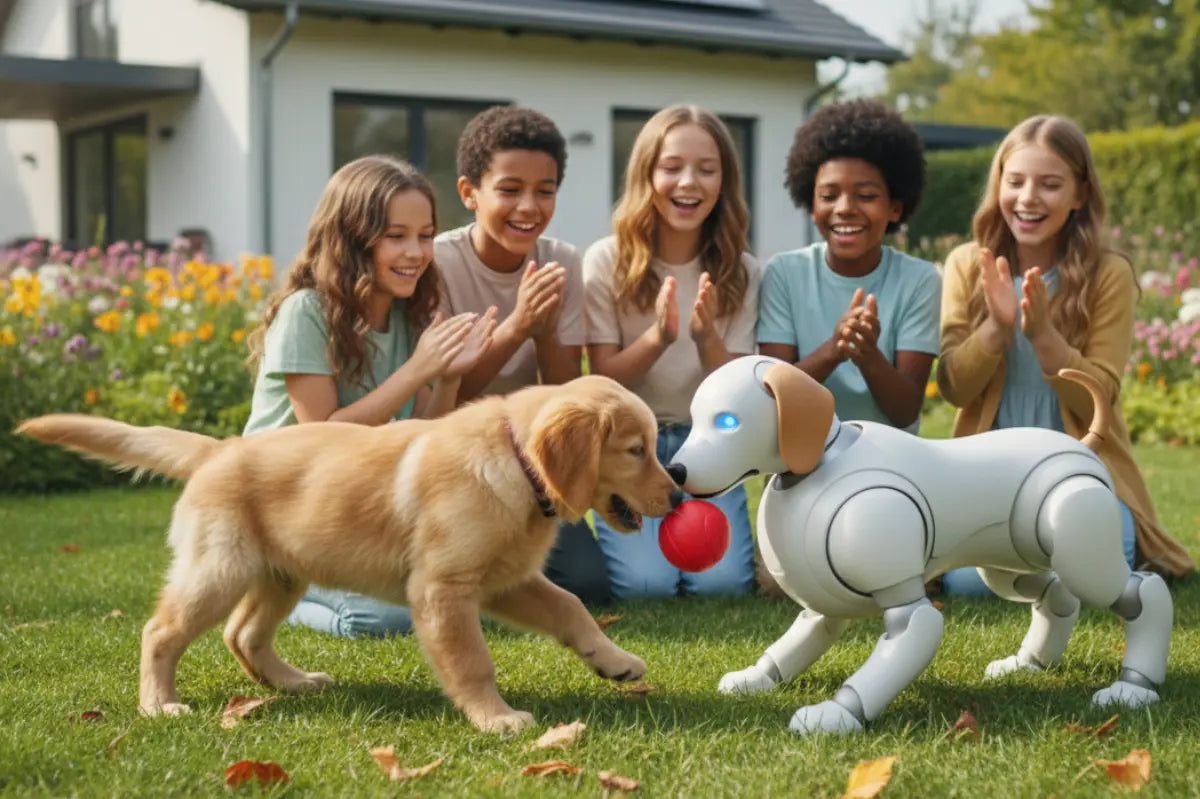






Pink robot dog toys sit in a sweet spot: they feel like a pet (without the shedding), they’re giftable, and the good ones can hold a kid’s attention longer than a typical “press-a-button” toy. But in 2026, the category is also messy—some are simple RC puppies, some are app-connected “smart toys,” and some lean into beginner STEM.
This guide helps you choose the right level of “robot” for your child—without overpaying for gimmicks, getting stuck with a toy that’s too loud, or accidentally bringing a privacy headache into your home.
2026 Quick Picks (Best Pink Robot Dog Toys at a Glance)
Instead of dropping a random top-10 list, here’s the shopping logic most parents actually use. Think of these as “best type of pink robot dog toy,” with real examples you can look up.
Best Overall (Most Families)
Look for: touch sensors + simple remote + volume control + rechargeable battery
Why it wins: it works for most kids 3–8 without needing your phone.
Best for Toddlers (Ages 1–3)
Look for: big buttons, slow movement, soft edges, no app required, lower volume
Avoid: tiny accessories, fast “stunt” movement, complicated voice-control
(Many products labeled “3+” are still a better fit than true toddler toys—always check parts size and battery access.)
Best for Ages 4–6 (Preschool/Kindergarten)
Look for: easy “tricks,” a remote that’s simple, and “repeatable fun” (dance modes, follow mode, basic training)
Example categories you’ll see: gesture-control + touch-sensor pink robotic puppies (often sold via major retailers).
Best for Ages 7–9 (More Interaction, Less Frustration)
Look for: better obstacle handling, smoother movement, stronger joints/gears
Tip: this is the age where “programmable tricks” can be fun—if it’s still easy to use.
Example category: programmable RC pink robot dogs marketed for ages ~3–8+ with “stunts” and routines.
Best for Ages 10–12+ / STEM & Coding
Look for: block coding or step-by-step “program a routine” features that don’t require a fragile app setup every time
Parent win: it feels like a toy and a project.
You’ll often see “programming function” robot puppies in big-box marketplaces.
Best Budget Pick
Look for: fewer features but reliable basics (walk, bark, simple tricks), and a return policy you trust.
Reality check: budget models are where noise and durability vary the most.
Best Premium Pick
Premium in 2026 usually means one of two things:
-
better build + smoother interaction, or
-
“smart companion” vibes (more sensors, possibly camera/mic).
The broader “companion robot” trend is showing up at major tech events, including puppy-like emotional companion robots that use cameras/microphones for interaction. That’s exciting—but it raises the privacy bar for parents.
Best Quiet / Apartment-Friendly Pick
Look for: volume steps, a true mute mode, calmer movement options, and fewer sudden sound effects.
Pro tip: “cute” sound effects are the #1 reason parents return robot pets.
Quick comparison table
If you’re comparing multiple listings and they all start to look the same, use this quick table as your “parent filter.” It highlights the few details that actually change day-to-day experience—like noise control, ease of use, floor compatibility, and privacy—so you can spot the best match in seconds.
| What you care about | What to look for in the listing |
| Quiet play | volume control / mute / “quiet mode” |
| Easy for young kids | physical buttons, simple remote, no app needed |
| Works on carpet | wheels with traction or stronger motors; “carpet” mentioned in reviews |
| Long-term durability | fewer flimsy legs/gears; sturdier body; good warranty/returns |
| Privacy-safe | offline play, minimal permissions, clear kid-privacy policy |

What Is a Pink Robot Dog Toy (And Who It’s Best For)?
A “pink robot dog toy” can mean very different products. Before you shop, decide which bucket you’re actually in.
Common types you’ll see in 2026
-
RC robot puppy: remote-controlled walking, turning, tricks
-
Touch-interactive robot dog: responds to head/back/belly touches
-
Voice-interactive robot dog: responds to simple commands (quality varies)
-
App-connected robot dog: your phone/tablet becomes the controller
-
STEM/coding robot dog: program sequences or routines
-
Plush-robot hybrid: softer body, simpler movement + comfort factor
Who these toys are best for
-
Kids who want a pet but your family can’t take on real pet care
-
Families who want low-mess pretend play
-
Gift buyers who want something that feels “special” and interactive
-
Kids who love routines and roleplay (feeding, training, walks—robot-style)
Who should skip certain types
-
Toddlers: skip app-heavy, complex voice, or fast stunt movement
-
Sensory-sensitive kids: skip toys without volume control or with unpredictable flashing/constant sounds
-
Parents who don’t want extra tech: avoid Wi-Fi/app-connected toys unless you’re comfortable managing permissions and updates

Safety & Privacy (Especially for App-Connected Robot Dogs)
Before we talk features and fun, it’s worth pausing on two things that actually decide whether a robot dog stays in your home—or ends up in a closet: safety and privacy. A pink robot puppy might look like a simple toy, but once an app, microphone, or Bluetooth connection is involved, you’re effectively bringing a small smart device into your child’s playtime. The good news: a quick checklist can help you avoid the most common red flags without turning this purchase into a research project.
Physical safety: what to check fast
Even when a toy looks cute, check the fundamentals:
-
Battery compartment security (especially for button batteries if present)
-
Pinch points around legs, hinges, and moving panels
-
Charging safety (heat, port quality, cable quality)
For U.S. shoppers, toy safety compliance often references standards like ASTM F963 and CPSIA-related requirements (lead/phthalates rules). The CPSC provides guidance and requirements mapping for ASTM F963 and broader children’s product safety rules.
For EU shoppers, toy safety is governed under the EU Toy Safety framework (e.g., Toy Safety Directive) and commonly demonstrated using EN 71 standards; the European Commission summarizes the toy safety framework.
(Practical parent takeaway: you’re not auditing a factory—just look for clear compliance labeling, reputable retailers, and strong return policies.)
Privacy: treat app-connected robot dogs like smart devices
If a robot dog uses an app, a microphone, a camera, or cloud features, it’s no longer “just a toy.”
Questions to ask before you buy:
-
Does it have a microphone? When is it active?
-
Is there a camera (even for “recognition”)?
-
Does it require an account/login?
-
Can it work offline?
-
What permissions does the app request (mic, location, contacts)?
-
How long does the company promise updates/support?
In the U.S., children’s privacy rules like COPPA are relevant to online services that collect personal information from kids, and the FTC provides plain-language guidance on when COPPA applies.
Parent-friendly rule:
If it needs an app, keep permissions tight, prefer offline play, and don’t assume “toy” means “privacy-safe.”
Price, Value & Long-Term Ownership (Care, Troubleshooting)
Now that you know what to look for (and what to avoid), the next question is the one every parent cares about: what’s actually worth paying for. Robot dog toys can jump in price fast, and the difference isn’t always “more fun”—sometimes it’s simply better durability, quieter operation, or fewer headaches with charging and setup. In this section, we’ll break down what you typically get at each price tier, plus the care and troubleshooting tips that help a robot dog last beyond the first week.
What you get at each price tier (2026 reality check)
Under $30:
-
basic movement + sounds
-
less consistent durability/noise control
$30–$80 (the sweet spot for most families):
-
better balance of interactivity + durability
-
often includes remote + touch sensors
$80–$150:
-
smoother motion, stronger build, better sensors
-
sometimes “smarter” routines without going fully app-dependent
$150+:
-
premium build or smart-companion features
-
can be worth it for older kids, but only if privacy + updates are solid (and the kid truly wants it)
Setup & care tips (make it last longer than a weekend)
-
Fully charge before first play; keep a dedicated charging spot
-
Clean wheels/feet regularly (hair and fuzz are the enemy)
-
Store accessories in a small pouch/bin immediately
-
Make “robot dog rules”: no stairs, no water, no outdoor dirt unless explicitly rated for it
Quick troubleshooting checklist
-
Not charging: try a different cable/adapter; check port wobble; confirm battery switch/door closure
-
Doesn’t respond: reduce background noise; re-pair remote/app; reset sequence (check manual)
-
Movement issues: clear wheel/leg jams; test on hard floor; replace batteries if remote-powered
-
App pairing problems: update OS/app, re-enable Bluetooth, and verify permissions (avoid granting more than needed)
Conclusion
Buying a pink robot dog toy in 2026 is really about choosing the right level of interaction for your child—not the longest feature list. If your kid is younger, a simple remote or button-based robot puppy with volume control and solid durability is usually the happiest (and quietest) win. For older kids, extra sensors, routines, and light STEM features can add real replay value—especially when the toy still works well without constant app setup.
Before you check out, do one last quick scan: age fit, noise settings, battery/charging details, and return policy. And if the toy is app-connected, treat it like a smart device—look for offline play, limited permissions, and clear privacy practices. Get those basics right, and a robot pup can be more than a one-week novelty—it can become the “pet” your child actually plays with.
FAQ
Are pink robot dog toys safe for toddlers?
They can be, but many are better for 3+. For toddlers, prioritize big parts, secure battery compartments, slow movement, and low volume.
Do robot dog toys work on carpet?
Some do, some struggle. Wheels and stronger motors usually handle carpet better than fragile walking legs—check reviews for your floor type.
Can robot dog toys record kids?
If the toy or its app uses a mic/camera, it may collect data depending on design. Treat app-connected toys like smart devices, review the privacy policy, and consider COPPA-related guidance for kid-directed services.